

Dementia & Alzheimer’s Home Care In Tampa, FL

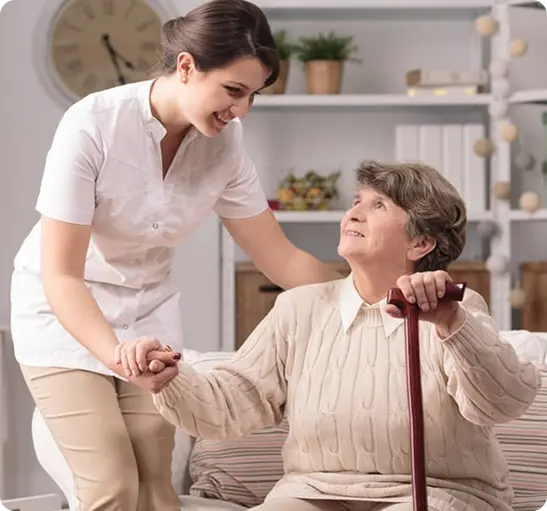
A nurse is helping an elderly woman with her wrist
Helping your loved one live safely, with dignity and comfort, in the home they know and love.
A nurse is helping an elderly woman with her wrist
A nurse speaks with an elderly woman in a wheelchair

Compassionate Dementia Home Care for Tampa Families

A nurse speaks with an elderly woman in a wheelchair
When someone you love is diagnosed with dementia or Alzheimer’s disease, the world shifts. The parent who always had the answers now struggles to find the right word. The spouse who managed every detail of the household now forgets whether they’ve taken their medication. The person you’ve known your entire life is still there — but the disease is slowly, painfully changing them. If you’re feeling overwhelmed, frightened, or unsure of what to do next, you’re not alone. And you don’t have to figure this out by yourself.
Empower Home Care provides specialized home care for dementia and Alzheimer’s patients across Tampa, FL and the surrounding Tampa Bay area. Our clinical team — registered nurses, occupational therapists, speech-language pathologists, medical social workers, and certified home health aides — understands the unique challenges of cognitive decline and delivers care that is medically informed, emotionally sensitive, and designed to preserve your loved one’s dignity, safety, and remaining abilities for as long as possible.
Research consistently shows that dementia patients do better in familiar environments. The sights, sounds, smells, and routines of their own home provide a sense of security that facilities cannot replicate. Our home care services are built around this principle — keeping your loved one in the environment where they feel safest while ensuring they receive the clinical support and daily assistance they need. As a CHAP-accredited, nurse-owned, and veteran-operated agency, we bring both clinical rigor and genuine human compassion to every family we serve.

What Families Need to
Know About Dementia

Contact Us

Dementia Is Not a Single Disease

Dementia is an umbrella term for a group of symptoms affecting memory, thinking, and social abilities severely enough to interfere with daily life. Alzheimer’s disease is the most common cause, accounting for 60–80% of dementia cases, but other causes include vascular dementia, Lewy body dementia, frontotemporal dementia, and Parkinson’s disease dementia. Each type presents differently and progresses at different rates. Our clinical team adapts our care approach to the specific type and stage of dementia your loved one is experiencing.

Initial Evaluation

How Dementia Affects Daily Life

In the early stages, dementia may show up as forgetfulness, word-finding difficulty, misplacing items, or getting confused in unfamiliar situations. As the disease progresses, these challenges become more significant: difficulty following conversations, getting lost in familiar places, forgetting how to perform routine tasks like cooking or managing finances, personality changes, suspicion or paranoia, wandering, difficulty recognizing family members, and eventually the inability to perform basic self-care activities like bathing, dressing, and eating.

Personalized Care Plan

Why Familiar Environment Matters

For dementia patients, the familiar environment of home provides critical anchoring cues that support remaining cognitive function. The kitchen they’ve cooked in for decades, the bathroom they navigate by muscle memory, the chair they always sit in, the family photos on the wall — these aren’t just comforts; they’re cognitive supports. Moving a dementia patient to an unfamiliar environment — a new facility, a family member’s home, even a rearranged room — can trigger increased confusion, agitation, anxiety, and accelerated decline. Home care allows your loved one to remain in the environment that gives them the best chance of maintaining function.

Treatment Sessions

The Emotional Toll on Families

Watching a parent or spouse lose their cognitive abilities is one of the most painful experiences a family can go through. It’s a grief that begins before death — grieving the person they were while still caring for the person they are becoming. Caregiver depression, anxiety, guilt, exhaustion, and physical health decline are extremely common among dementia caregivers. Our team recognizes that caring for the caregiver is just as important as caring for the patient. We actively support family members throughout this journey.

How Our Tampa Team Supports
Dementia Patients at Home

A woman in scrubs assists an elderly man in a wheelchair

Home Safety Assessment & Modification

Safety is the most immediate concern for dementia patients at home. Our occupational therapists conduct comprehensive home safety evaluations addressing wandering risks (door alarms, locks, identification bracelets), kitchen hazards (stove knob covers, sharp object removal, automatic shut-off appliances), bathroom dangers (grab bars, non-slip mats, water temperature regulators), fall hazards (area rugs, clutter, poor lighting, stairs), and general environment (medication lockboxes, removal of toxic substances, simplified room layouts). These modifications can dramatically extend the time a dementia patient can safely remain at home.

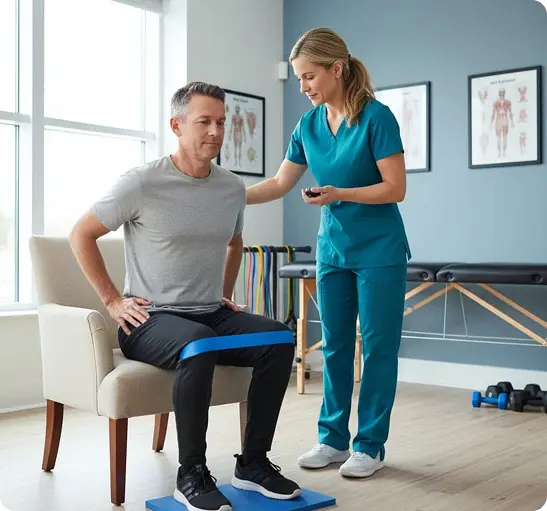
A physical therapist assists a man sitting on a chair

Cognitive Support & Structured Routines

Our occupational therapists and speech-language pathologists provide cognitive exercises and help establish structured daily routines that support remaining abilities. Consistent routines — the same wake time, meal times, activity times, and bedtime — reduce confusion and anxiety for dementia patients. We also create visual schedules, label common items, and simplify tasks into manageable steps. The goal is not to reverse cognitive decline but to maximize function and quality of life within each patient’s current abilities.

An older woman sits on the floor

Medication
Management

Dementia patients are at extremely high risk for medication errors — forgotten doses, double doses, wrong medications, and dangerous interactions. Our skilled nurses manage medication reconciliation, set up pill organizers, establish reminder systems, coordinate with prescribing physicians, and monitor for side effects. For patients on cholinesterase inhibitors (donepezil, rivastigmine, galantamine) or memantine, our nurses track effectiveness and report changes to the neurologist.

A woman in scrubs assists an elderly man in a wheelchair

Home Safety Assessment & Modification

Safety is the most immediate concern for dementia patients at home. Our occupational therapists conduct comprehensive home safety evaluations addressing wandering risks (door alarms, locks, identification bracelets), kitchen hazards (stove knob covers, sharp object removal, automatic shut-off appliances), bathroom dangers (grab bars, non-slip mats, water temperature regulators), fall hazards (area rugs, clutter, poor lighting, stairs), and general environment (medication lockboxes, removal of toxic substances, simplified room layouts). These modifications can dramatically extend the time a dementia patient can safely remain at home.

A physical therapist assists a man sitting on a chair

Cognitive Support & Structured Routines

Our occupational therapists and speech-language pathologists provide cognitive exercises and help establish structured daily routines that support remaining abilities. Consistent routines — the same wake time, meal times, activity times, and bedtime — reduce confusion and anxiety for dementia patients. We also create visual schedules, label common items, and simplify tasks into manageable steps. The goal is not to reverse cognitive decline but to maximize function and quality of life within each patient’s current abilities.

An older woman sits on the floor

Medication
Management

Dementia patients are at extremely high risk for medication errors — forgotten doses, double doses, wrong medications, and dangerous interactions. Our skilled nurses manage medication reconciliation, set up pill organizers, establish reminder systems, coordinate with prescribing physicians, and monitor for side effects. For patients on cholinesterase inhibitors (donepezil, rivastigmine, galantamine) or memantine, our nurses track effectiveness and report changes to the neurologist.

A woman and a child sit at a table

Speech & Communication
Therapy

As dementia progresses, patients lose the ability to find words, follow conversations, express needs, and eventually communicate verbally at all. Our speech-language pathologists work with patients to maintain communication abilities as long as possible, introduce compensatory strategies (communication boards, picture cards, simplified yes/no questions), and train family members on how to communicate more effectively with their loved one — speaking slowly, using simple sentences, offering visual cues, and giving adequate response time.

A woman and a child sit at a table

Speech & Communication
Therapy

As dementia progresses, patients lose the ability to find words, follow conversations, express needs, and eventually communicate verbally at all. Our speech-language pathologists work with patients to maintain communication abilities as long as possible, introduce compensatory strategies (communication boards, picture cards, simplified yes/no questions), and train family members on how to communicate more effectively with their loved one — speaking slowly, using simple sentences, offering visual cues, and giving adequate response time.

A woman dances joyfully with an older woman

Personal Care & Daily Living Assistance

Our certified home health aides provide gentle, patient personal care for dementia patients — bathing, grooming, dressing, toileting, meal preparation, and feeding assistance. Dementia patients often resist personal care because they don’t understand what’s happening or feel their dignity is being violated. Our aides are trained in dementia-specific techniques: approaching slowly and calmly, explaining each step, offering choices (even small ones), maintaining a warm and reassuring tone, and allowing extra time. The goal is safe, dignified care without confrontation.

A younger woman helps an elderly woman with a walker

Behavioral Support & De-Escalation

Dementia often causes behavioral symptoms that are deeply distressing for families: agitation, aggression, sundowning (increased confusion and anxiety in late afternoon and evening), repetitive questions, hoarding, paranoia, and wandering. These behaviors are not intentional — they are symptoms of the disease. Our team helps families understand the triggers behind these behaviors and teaches de-escalation strategies: redirecting attention, removing environmental triggers, adjusting lighting and noise levels, providing calming activities, and knowing when to simply step back and let the moment pass.

A woman dances joyfully with an older woman

Personal Care & Daily
Living Assistance

Our certified home health aides provide gentle, patient personal care for dementia patients — bathing, grooming, dressing, toileting, meal preparation, and feeding assistance. Dementia patients often resist personal care because they don’t understand what’s happening or feel their dignity is being violated. Our aides are trained in dementia-specific techniques: approaching slowly and calmly, explaining each step, offering choices (even small ones), maintaining a warm and reassuring tone, and allowing extra time. The goal is safe, dignified care without confrontation.

A younger woman helps an elderly woman with a walker

Behavioral Support &
De-Escalation

Dementia often causes behavioral symptoms that are deeply distressing for families: agitation, aggression, sundowning (increased confusion and anxiety in late afternoon and evening), repetitive questions, hoarding, paranoia, and wandering. These behaviors are not intentional — they are symptoms of the disease. Our team helps families understand the triggers behind these behaviors and teaches de-escalation strategies: redirecting attention, removing environmental triggers, adjusting lighting and noise levels, providing calming activities, and knowing when to simply step back and let the moment pass.

A woman and a child sit at a table

Caregiver Education
& Support

Families are not born knowing how to care for someone with dementia. Our team provides hands-on caregiver education covering communication techniques, safe transfer methods, managing behavioral symptoms, understanding disease progression, self-care for the caregiver, and knowing when to ask for more help. Our medical social workers provide individual and family counseling, connect caregivers with Alzheimer’s Association support groups in Tampa Bay, and help families navigate the difficult decisions that lie ahead — including when facility placement becomes necessary.

A woman dances joyfully with an older woman

Long-Term Planning & Advance Directives

Dementia is progressive, and planning for the future while your loved one can still participate in decisions is critically important. Our medical social workers help families address healthcare power of attorney, living wills, financial planning considerations, long-term care options, and conversations about wishes for end-of-life care. These conversations are sensitive and difficult, and our team handles them with compassion, patience, and respect for the patient’s remaining autonomy.

A woman dances joyfully with an older woman

Caregiver Education
& Support

Families are not born knowing how to care for someone with dementia. Our team provides hands-on caregiver education covering communication techniques, safe transfer methods, managing behavioral symptoms, understanding disease progression, self-care for the caregiver, and knowing when to ask for more help. Our medical social workers provide individual and family counseling, connect caregivers with Alzheimer’s Association support groups in Tampa Bay, and help families navigate the difficult decisions that lie ahead — including when facility placement becomes necessary.

A younger woman helps an elderly woman with a walker

Long-Term Planning &
Advance Directives

Dementia is progressive, and planning for the future while your loved one can still participate in decisions is critically important. Our medical social workers help families address healthcare power of attorney, living wills, financial planning considerations, long-term care options, and conversations about wishes for end-of-life care. These conversations are sensitive and difficult, and our team handles them with compassion, patience, and respect for the patient’s remaining autonomy.

Is Home the Right Place for a Dementia Patient?

A nurse stands beside a woman seated in a chair,
This is one of the most agonizing questions families face. The answer depends on the stage of the disease, the patient’s safety, the caregiver’s capacity, and the home environment. Here’s what to consider:

Home is usually better in early-to-middle stages

The familiar environment supports cognitive function, reduces confusion, and maintains the patient’s sense of identity and comfort. Professional home care fills the gaps that family caregivers can’t cover alone.

Operated

Safety determines the tipping point

If a patient is wandering out of the house, leaving the stove on repeatedly, becoming aggressive, or the caregiver can no longer physically manage transfers and personal care, facility placement may become necessary. Our team helps you recognize these signs and make the transition when the time comes.

Licensed, Experienced

Cost comparison

Memory care facilities in Tampa typically cost $5,000–$8,000+ per month out of pocket. Home health care covered by Medicare is provided at no cost. Even with supplemental private-duty aide hours, home care is usually significantly less expensive.

Quality of life

At home, your loved one maintains their routines, their personal possessions, their pet, their garden, their neighborhood. These anchoring elements have genuine therapeutic value for dementia patients.

Our team can help your family evaluate this decision at every stage. We are honest about what home care can and cannot provide, and we support families through facility transitions when that becomes the right choice.
A nurse stands beside a woman seated in a chair,

Supporting Families
at Every Stage

Contact Us

Early Stage (Mild Cognitive Impairment → Early Dementia)

The patient is still largely independent but experiencing noticeable memory lapses, word-finding difficulty, and occasional confusion. Home care at this stage focuses on safety assessment, medication management setup, cognitive exercises, establishing structured routines, and — critically — completing advance directives and legal planning while the patient can still participate. This is also the best time for caregiver education.

Initial Evaluation

Middle Stage
(Moderate Dementia)

This is typically the longest stage and when most families seek home care. The patient needs increasing assistance with daily activities, may wander, may not recognize some family members, and may exhibit behavioral symptoms. Home care includes regular nursing visits for medication management, OT for daily living adaptation, speech therapy for communication, home health aide for personal care, behavioral management strategies, and active caregiver support and respite.

Personalized Care Plan

Late Stage (Severe Dementia)

In late-stage dementia, the patient requires near-total assistance with all activities, may lose the ability to walk, sit up, or swallow safely, and may no longer recognize family. Home care becomes more intensive: more frequent aide visits, skilled nursing for medical management, speech therapy for swallowing safety, skin integrity monitoring, comfort care, and emotional support for the family. Our team also helps families navigate hospice conversations when appropriate.

A nurse stands beside a woman seated in a chair,

Why Tampa Families Trust Empower for Dementia & Alzheimer’s Care

A nurse stands beside a woman seated in a chair,

Nurse-Owned Clinical Leadership

Our nurse founders ensure our team is equipped for the clinical complexity of dementia care.

Operated

Multidisciplinary Approach

Nursing, OT, speech therapy, social work, and aide coordinated under one plan — essential for a disease that affects cognition, communication, safety, behavior, and daily function simultaneously

Licensed, Experienced

CHAP Accredited

Independently verified quality standards.

Veteran-Operated

Patience, discipline, and unwavering reliability in every visit.

familiarity

Dementia-Trained Aides

Our home health aides are trained in dementia-specific care techniques: calm approach, gentle communication, patience with resistance, and dignity preservation.

All Services In-House

Family-Centered Care Model

We don’t just care for the patient — we actively support the caregiver with education, counseling, respite, and connection to community resources.

Accredited

Honest, Compassionate Guidance

We help families navigate the disease’s progression with honesty about what to expect and compassion for how hard it is.

Accredited

Three-County Coverage

Serving dementia patients across Hillsborough, Manatee, and Polk counties.

Dementia & Alzheimer’s Home
Care Across Tampa Bay

We provide specialized Parkinson’s home care across our entire three-county service area:

Hillsborough County

Tampa, Brandon, Riverview, Plant City, Carrollwood, Temple Terrace, Valrico, Lutz, Sun City Center, New Tampa, North Tampa, and all surrounding communities.

Manatee County

Bradenton, Palmetto, Lakewood Ranch, Parrish, Sarasota, Ellenton, Anna Maria, Holmes Beach, Longboat Key, Cortez, Bayshore Gardens, and all surrounding communities.

Polk County

Lakeland, Winter Haven, Bartow, Haines City, Auburndale, Davenport, Lake Alfred, Polk City, Mulberry, Highland City, and all surrounding communities.

Hillsborough County

Tampa, Brandon, Riverview, Plant City, Carrollwood, Temple Terrace, Valrico, Lutz, Sun City Center, New Tampa, North Tampa, and all surrounding communities.

Manatee County

Bradenton, Palmetto, Lakewood Ranch, Parrish, Sarasota, Ellenton, Anna Maria, Holmes Beach, Longboat Key, Cortez, Bayshore Gardens, and all surrounding communities.

Polk County

Lakeland, Winter Haven, Bartow, Haines City, Auburndale, Davenport, Lake Alfred, Polk City, Mulberry, Highland City, and all surrounding communities.

Insurance & Medicare

Is Dementia Home Care Covered by Medicare?

Yes. Home health care for dementia and Alzheimer’s patients is covered by Medicare Part A when ordered by a physician, the patient is homebound, and skilled intermittent care is needed. This includes skilled nursing (medication management, monitoring), occupational therapy (safety assessments, daily living adaptation), speech therapy (communication, swallowing), medical social services, and home health aide — all at no copay or deductible. Because dementia is progressive, patients typically qualify for ongoing or repeated episodes of home health care as new skilled needs arise over time. Call (813) 652-7070 for a free benefits verification.

Frequently Asked Questions
About Dementia Home Care

When should we start home care for a dementia patient?
The earlier the better. Starting home care when cognitive symptoms are mild allows us to establish safety modifications, medication systems, structured routines, and advance directives while your loved one can still participate. Don’t wait for a crisis — a fall, a wandering incident, or a medication emergency. If you’re noticing changes, call us for a free assessment.
Yes. Medicare covers skilled nursing, therapy, social services, and home health aide for dementia and Alzheimer’s patients at no cost when a physician orders the services and the patient qualifies. Because dementia is progressive, patients often qualify for multiple rounds of care as new needs emerge.
Yes. Our team assesses your home for wandering risks and recommends modifications: door alarms, door locks with delayed exits, identification bracelets, GPS tracking devices, fence/gate security, and environmental cues that reduce the urge to leave. We also educate caregivers on wandering prevention strategies and what to do if a wandering episode occurs.
Aggression and agitation in dementia patients are symptoms of the disease, not intentional behavior. Our team is trained in de-escalation techniques: identifying triggers (pain, overstimulation, confusion, fear), redirecting attention, reducing environmental stressors, speaking calmly and simply, and knowing when to give the patient space. We also educate family members on these techniques so they can manage difficult moments between visits.
Sundowning refers to increased confusion, agitation, and behavioral symptoms that typically occur in the late afternoon and evening. It affects many dementia patients and is especially distressing for caregivers. Our team helps manage sundowning through structured afternoon routines, limiting caffeine and naps, increasing daytime light exposure, reducing evening stimulation, and scheduling aide visits during peak sundowning hours when possible.
Dementia caregiving is one of the most emotionally and physically demanding roles anyone can take on. We support caregivers through home health aide visits that provide scheduled relief, medical social worker counseling, caregiver education on disease progression and care techniques, connection to Alzheimer’s Association support groups and Tampa Bay dementia resources, and honest guidance about when to consider additional help or facility placement.
This is a deeply personal decision. General indicators include: the patient is regularly wandering out of the home despite safety modifications, aggressive behavior is putting the patient or caregiver at physical risk, the caregiver’s own health is failing, the patient requires supervision that no reasonable in-home schedule can provide, or the patient’s swallowing and medical complexity exceed what home care can safely manage. Our team helps families recognize these signs and supports them through the transition with honesty, compassion, and practical assistance.

Your Loved One Deserves Compassionate, Expert Dementia Care At Home

A dementia diagnosis is frightening. But with the right support, your loved one can continue to live safely, comfortably, and with dignity in the home they know. And you — the caregiver — don’t have to carry this alone. Contact Empower Home Care today for a free, no-obligation assessment. We’ll listen to your family’s situation, answer every question, and help you find the right path forward.

Phone:

(813) 652-7070
Referral Fax : (866) 728-0013

Email

info@empowerhomecare.net

Home Office

10002 Princess Palm Ave, Suite 100, Tampa, FL 33619